
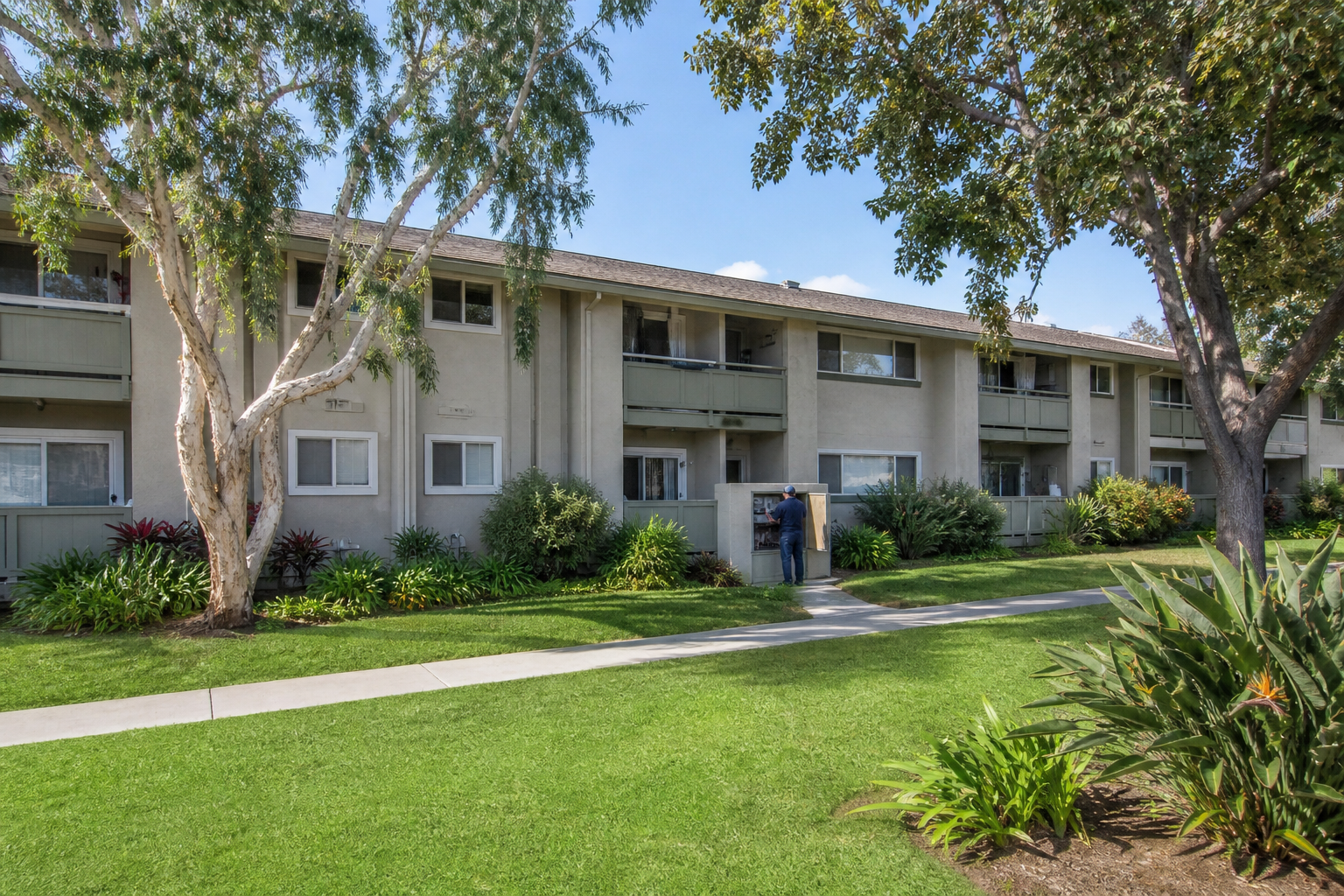
At 20 units, you are running a business. The question is whether you are ready to manage it like one.
The transition from small multifamily into a 20-unit apartment building is not just a step up in unit count. It is a shift in what the investment demands from you as an owner. Operational complexity at 20 units, combined with the capital requirements and regulatory environment in Southern California, makes professional property management and disciplined underwriting non-negotiable. Buyers who treat a 20-unit acquisition like a scaled-up single-family rental tend to underperform. Those who treat it like a small commercial asset tend to build lasting wealth.
Why Scale Changes Everything
At 20 units, tenant turnover is a constant, not an occasional event. A 10% annual vacancy assumption means 2 units turning over per year. Each turnover involves cleaning, repairs, leasing, and screening. At 20 units, the economics of professional management, typically 8-10% of gross revenues, are clearly justified. Attempting to self-manage 20 units is a time commitment that most owners find unsustainable within two years.
California's tenant protection laws, AB 1482 rent caps, required notice periods, just-cause eviction requirements, and habitability standards all demand documentation, process, and legal fluency. A professional property manager brings established systems for all of these. An owner managing independently is personally responsible for compliance.
Underwriting at the 20-Unit Scale
At 20 units, expenses that are minor at 8 units become significant line items. Model these carefully:
Property management fee: 8-10% of effective gross income, not to be treated as optional.
Maintenance and repairs: Budget $800-$1,200 per unit annually for a well-maintained asset, higher for older vintage buildings.
Capital reserves: $200-$400 per unit annually as a starting point. Adjust based on property age and deferred maintenance identified in your inspection.
Insurance: SoCal insurance costs have risen significantly since 2023. Get current quotes before finalizing your expense model, not broker estimates.
Financing a 20-Unit Acquisition
At 20 units, you are firmly in commercial lending territory. Loan terms are asset-specific rather than borrower-specific at the margins. DSCR requirements typically fall between 1.20-1.25x. Lenders will recast your income and expenses independently. Bring clean financials, a clear rent roll, and 2-3 years of operating history if available.
Low-leverage acquisitions at 20 units perform more predictably through market cycles. VisionWise Capital maintains LTV under 50% across its portfolio, a discipline that supports cash flow stability and refinancing flexibility regardless of interest rate conditions.
Sourcing 20-Unit Buildings in SoCal
The 20-unit segment in Southern California is actively sought by institutional buyers, 1031 exchange investors, and long-term operators simultaneously. That competition makes off-market access more valuable at this size than at smaller unit counts. VisionWise Capital works directly with owners of 20-unit buildings throughout SoCal, often facilitating ownership transitions that never reach public brokerage.
Ready to take the next step? Explore 20-Unit Opportunities in SoCal →
This content is for informational purposes only and does not constitute investment, legal, or tax advice. Real estate transactions and private placements involve significant risk, including potential loss of principal. Always consult qualified legal, financial, and tax professionals before making investment decisions.
FAQs
What should readers verify before making a decision?
Verify current property, financial, legal, tax, financing, insurance, operating, and market information with qualified professionals.
Are projected investment results guaranteed?
No. Projections are based on assumptions, and actual income, expenses, values, financing terms, timing, and returns may differ.
Why is due diligence important?
Due diligence helps identify missing information, test assumptions, clarify responsibilities, and evaluate risks before a binding decision.
Which professionals may be needed?
Depending on the situation, consult qualified legal, tax, financial, lending, insurance, inspection, valuation, and property-management professionals.
Can market conditions change the outcome?
Yes. Interest rates, rents, occupancy, expenses, regulations, insurance, capital needs, and buyer or investor demand can change.
Is this article legal, tax, financial, or investment advice?
No. The article is provided for general educational purposes and does not replace advice based on individual circumstances.
For the tax rules referenced above, see IRS guidance on like-kind (1031) exchanges.
Related Reading
- How to Evaluate a Multifamily Investment Opportunity
- How to Value an Apartment Building in Southern California
- SoCal Apartment Building Valuations in 2026: What Owners Need to Know